

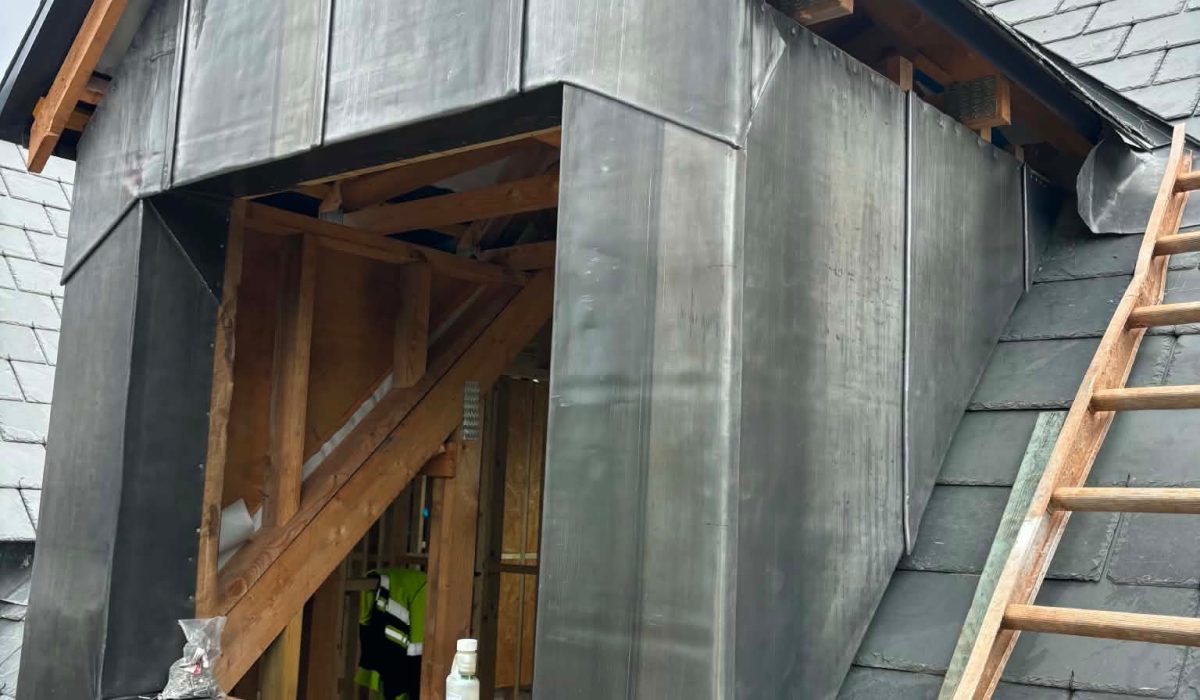
Lead Roofing Explained: Uses, Cost and Why It Lasts 100 Years
Lead roofing is one of the oldest and most trusted materials in the trade, and done well it is also one of the longest lasting. You will find it on everything from grand churches and period homes to modern new builds, quietly keeping water out of the trickiest parts of a roof. Even so, plenty of homeowners are not quite sure what lead roofing actually is, where it is used, or why it costs what it does. In this guide we explain it all in plain English. We cover what lead roofing is, where it goes on a roof, the lead codes the professionals use, what it costs, and why a properly fitted lead detail can last a hundred years or more.
What is lead roofing?
Lead roofing is the use of sheet lead to weatherproof a roof, either as a covering in its own right or, far more commonly, to seal the vulnerable joints and details where water is most likely to get in. Lead has been used for centuries because it is remarkably durable, naturally weatherproof, and soft enough to be shaped precisely around awkward shapes by a skilled roofer. When people talk about leadwork, they usually mean these carefully formed details rather than an entire roof made of lead.
Where is lead roofing used?
On most homes, lead is used at the points where a plain tiled or slated roof cannot keep water out on its own. The most common uses are these.
- The internal angle where two roof slopes meet and rainwater channels down.
- The seals where a roof meets a wall, chimney or another surface.
- Chimney soakers and aprons. These protect the join around the chimney stack.
- Bay window and porch roofs. These are often finished entirely in lead.
- Dormer windows and box gutters. Complex shapes like these need a watertight, formed finish.
Because these are exactly the spots where most roof leaks begin, good leadwork is one of the best indicators of a quality roof.
Lead codes explained (Code 3 to Code 8)
Sheet lead is graded by thickness using a colour coded system of codes. The higher the code, the thicker and heavier the lead, and the more demanding the job it is suited to. As a quick guide:
- Code 3 (light). Soakers and lightweight details.
- Code 4. The most common all round choice for flashings and smaller details.
- Code 5. Valleys, larger flashings and general leadwork.
- Code 6, 7 and 8 (heavy). Bay roofs, box gutters, dormers and heavier duty or heritage work.
Using the right code for the job matters. Too thin, and the lead can fatigue and split. Correctly specified, it will comfortably outlast the rest of the roof. A specialist roofer will always match the code to the detail.
Why does lead last 100 years?
Lead’s longevity comes down to its nature. It does not rust, it forms a stable protective patina that shrugs off the weather, and it is soft enough to move gently with the seasons rather than cracking under thermal expansion. When it is dressed and fixed correctly, with the right code, the right joints and room to move, a lead detail can last 80 to 100 years or more. It is also fully recyclable, which makes it one of the more sustainable choices in roofing. The important part is that phrase, fitted correctly. Lead is unforgiving of poor workmanship, which is exactly why it is worth using a specialist.
What does lead roofing cost?
Lead is a premium material and skilled leadwork is a craft, so it typically costs more per square metre than standard tiling. The exact price depends on the lead code required, the size and complexity of the detail, and how accessible it is. A small flashing repair is a modest job, while a full bay roof or a run of new valleys is a larger investment. What you are paying for, though, is longevity. A lead detail done properly should not need touching again for decades, which makes it excellent value over the life of the roof. As always, we provide a clear written quote before any work begins.
Signs your leadwork needs attention
Even good lead needs looking at eventually. It is worth having your leadwork checked if you notice cracks or splits in the lead, sections that have lifted or come away from the wall or chimney, white staining running down the brickwork below, or damp appearing internally near a chimney, valley or bay. Caught early, a lead repair is usually straightforward. Left too long, it can let water into the structure.
Why choose a leadwork specialist?
Lead rewards experience. It has to be cut, dressed and fixed to allow for movement, with the correct code and the right detailing, or it will fail early. At North Devon Roofing, leadwork is one of our specialisms, and we are NFRC certified, CHAS accredited and members of the Confederation of Roofing Contractors, fully insured and with all our work guaranteed. Our standards are independently checked too. Our roofing recently earned a top 6 out of 6 rating in an NHBC Construction Quality Review. When it comes to something as unforgiving as lead, that experience is exactly what protects your home.
The areas we cover across North Devon
We carry out lead roofing and leadwork right across North Devon, including Barnstaple, Bideford, Ilfracombe, Braunton, Croyde, Woolacombe, South Molton, Great Torrington, Holsworthy, Northam, Appledore and Instow, along with the surrounding towns and villages. Wherever you are in the region, you are dealing with a nearby, specialist team.
Frequently asked questions
How long does lead roofing last?
Correctly fitted lead can last 80 to 100 years or more. Its lifespan depends on using the right lead code for the job and allowing the lead room to move, which is why specialist workmanship matters.
Is lead roofing expensive?
Lead costs more per square metre than standard tiling because it is a premium material fitted by skilled hands. Over the life of the roof, though, it is excellent value, because a properly fitted lead detail rarely needs attention for decades.
What is lead flashing?
Lead flashing is the shaped lead that seals the joint where a roof meets a wall, chimney or another surface. It is one of the most common and most important uses of lead on a home, as these joints are where leaks often start.
Do you carry out lead roofing across North Devon?
Yes. Leadwork is one of our specialisms and we cover Barnstaple, Bideford, Ilfracombe and the wider North Devon area, including the surrounding towns and villages.