

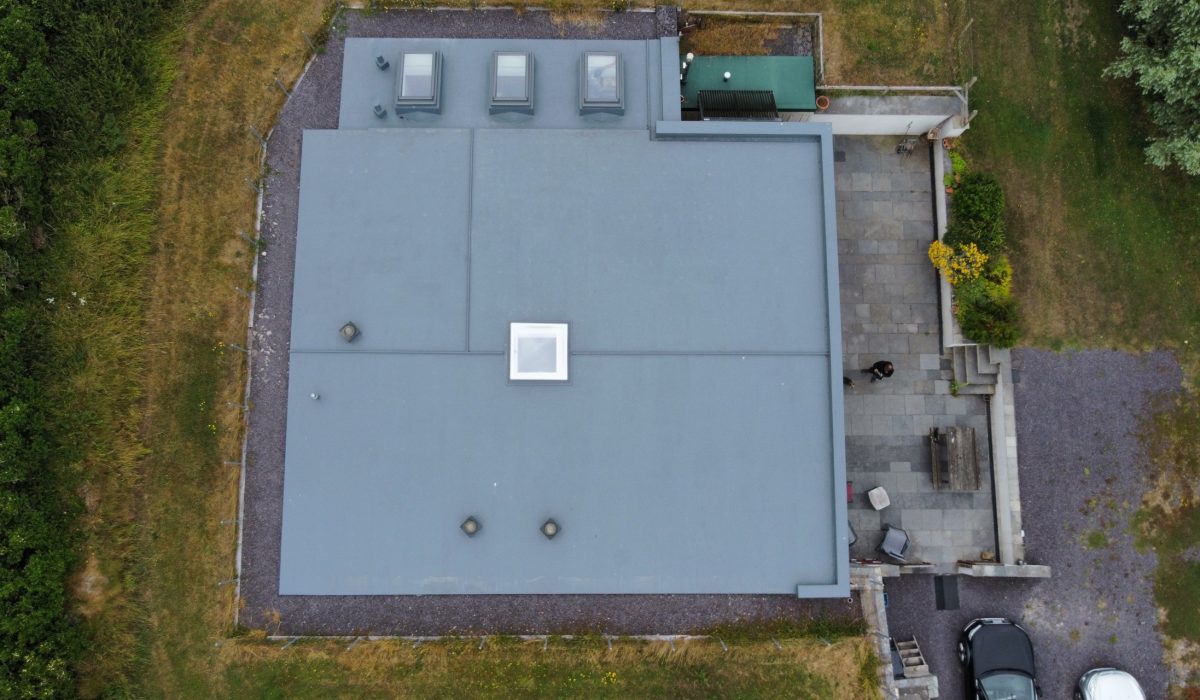
Flat Roofing Explained: Types, Costs and Which Is Best for Your Home
Flat roofing has come a long way. The days of a flat roof meaning a leaky felt garage are long gone, and modern systems can last for decades with very little fuss. If you have an extension, a dormer, a garage or a porch, the chances are a flat roof is involved somewhere. In this guide we explain what flat roofing is, the main types available today, what each one costs, how long they last, and how to choose the right system for your home. The aim is simply to help you understand your options before you spend a penny.
What is flat roofing and where is it used?
A flat roof is any roof with a very low pitch, laid to a slight fall so that water can drain away rather than sit on the surface. You will most often find flat roofs on single storey extensions, dormer windows, garages, porches, bay windows and outbuildings, as well as on many commercial buildings. The key to a good flat roof is not just the material on top, but the deck beneath it, the fall that carries water away, and the quality of the detailing at the edges and upstands. Get those right and a modern flat roof performs very well.
The main types of flat roofing
There are three systems you are most likely to be offered today. Each has its place, and the right choice depends on the roof, the budget and how long you want it to last.
Fibreglass (GRP)
Glass reinforced plastic is a seamless, hard wearing finish laid as a liquid and left to cure into one solid layer with no joints for water to find. It looks neat, copes well with foot traffic, and typically lasts around 25 to 30 years. It is an excellent choice for extensions and balconies, and it is one of our most popular flat roof systems.
EPDM rubber
EPDM is a synthetic rubber membrane, usually fitted in a single large sheet so there are very few joints. It is flexible, extremely durable and can last 30 years or more. It handles temperature changes and movement well, which makes it a strong, low maintenance option for garages, extensions and larger flat areas.
Felt (built-up roofing)
Modern torch on felt is a world away from the old single layer felt of the past. Built up in layers, today’s felt systems are reliable and cost effective, and a quality installation can last around 15 to 20 years. Felt remains a sensible, budget friendly choice for garages and outbuildings.
What does flat roofing cost?
Flat roofing is usually priced per square metre, and the total depends on the system you choose, the size and access of the roof, and whether the deck underneath needs replacing. As a rough guide, felt tends to be the most affordable option, with fibreglass and EPDM costing more but lasting longer. Because a longer lasting roof spreads its cost over far more years, the cheapest option upfront is not always the best value overall. We will always talk you through the trade offs and give you a clear written quote before starting.
How long does a flat roof last?
It depends entirely on the system and the quality of the installation. As a general guide, a good felt roof lasts around 15 to 20 years, fibreglass around 25 to 30 years, and EPDM 30 years or more. Whichever you choose, lifespan comes down to correct falls, sound detailing and a proper deck underneath, which is why the installer matters just as much as the material.
Flat roof or pitched roof?
If you are planning an extension, you may be weighing up a flat roof against a pitched one. Flat roofs are usually cheaper, quicker to build and better suited to low profile extensions and areas where height is limited. Pitched roofs shed water faster and can last longer, but cost more and need the space to build up. There is no single right answer, and the best choice depends on your building and your budget. We are always happy to advise on which suits your project.
Signs your flat roof needs replacing
It is worth having your flat roof looked at if you notice pooling water that does not drain away, cracks, splits or blisters in the surface, damp patches on the ceiling below, or a felt roof that has started to lift at the edges. Caught early, a repair may be enough. Left too long, water gets into the deck and the whole roof will need replacing, so it pays to act on the early signs.
Why use an accredited local team?
A flat roof is only as good as the person who fits it, so experience and standards really matter. We are NFRC certified (National Federation of Roofing Contractors), CHAS accredited and members of the Confederation of Roofing Contractors, fully insured and with all our work guaranteed. Our standards are independently checked too, and our roofing recently earned a top 6 out of 6 rating in an NHBC Construction Quality Review. When we fit a flat roof, it is done properly, with the right falls, the right detailing and a finish built to last.
The areas we cover across North Devon
We install and repair flat roofs right across North Devon, including Barnstaple, Bideford, Ilfracombe, Braunton, Croyde, Woolacombe, South Molton, Great Torrington, Holsworthy, Northam, Appledore and Instow, along with the surrounding towns and villages. Wherever you are in the region, you are dealing with a nearby team.
Frequently asked questions
What is the best type of flat roofing?
There is no single best system, but fibreglass (GRP) and EPDM rubber are the most popular modern choices because they are seamless, hard wearing and long lasting. Felt is a reliable, more affordable option for garages and outbuildings.
How long does a flat roof last?
A good felt roof lasts around 15 to 20 years, fibreglass around 25 to 30 years, and EPDM 30 years or more. The quality of the installation makes a big difference to the lifespan.
How much does a flat roof cost?
Flat roofing is priced per square metre and varies with the system, the size and the access. Felt is usually the cheapest, while fibreglass and EPDM cost more but last longer. We provide a clear written quote before any work begins.
Can you repair a flat roof rather than replace it?
Often yes. If the problem is caught early and the deck underneath is sound, a repair may be all that is needed. If water has already got into the deck, replacement is usually the better long term option.