

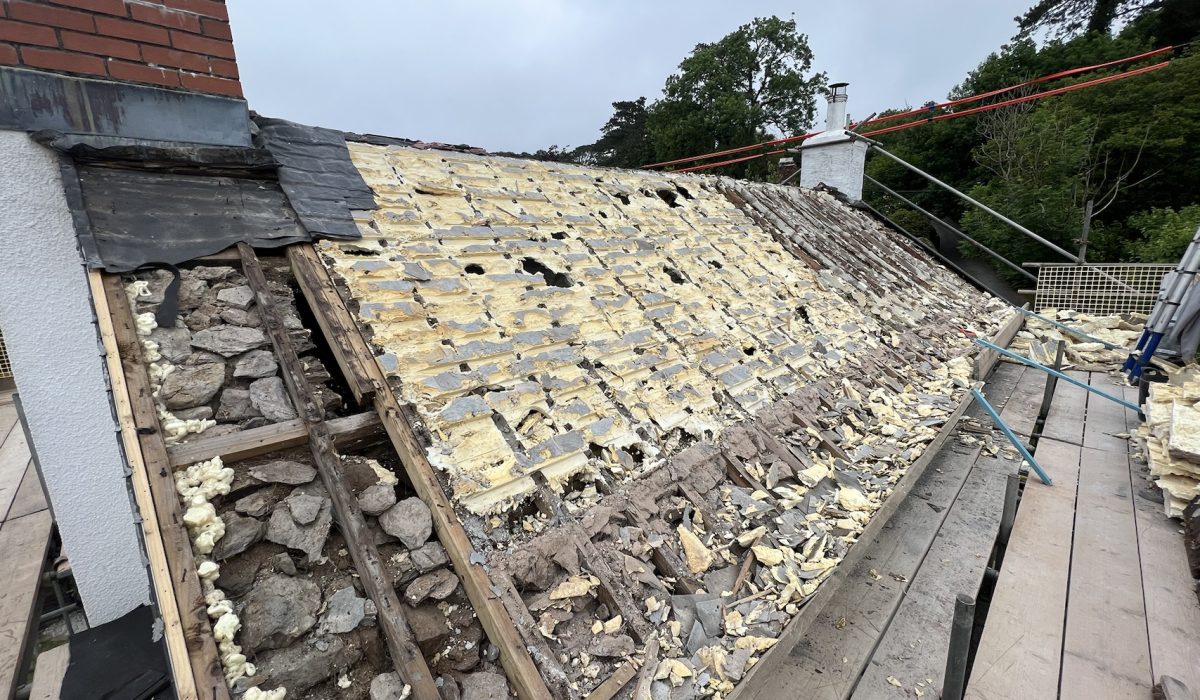
Spray foam insulation is often sold as a quick, cheap way to cut heating bills, and it does go up fast, sprayed directly onto the underside of your roof in a single visit. What doesn’t always get explained at the time is what it can do to your roof timbers over the years that follow, or the trouble it can cause when you come to sell or remortgage. If you’ve already got spray foam in your loft, or someone is trying to sell it to you, here’s what you need to know.
Why spray foam causes problems for your roof
A traditional roof is designed to breathe. Air moves through the loft space, carrying moisture out before it can settle, and the timbers stay dry as a result. Spray foam, especially the closed cell type, seals that airflow off completely. Moisture from inside the house gets trapped against the timber instead of escaping, and over time that leads to condensation, rot and decay in exactly the structure holding your roof up. Because the foam bonds tightly to the timber and the underside of the tiles or slates, it also hides the problem from view. Rot can be well underway before anyone notices, and by then it’s usually a bigger, more expensive job than it would have been if it had been caught early.
The mortgage and property value problem
This isn’t just a roofing issue, it’s become a real financial headache for a lot of homeowners. RICS has warned that spray foam can lead to a surveyor reducing a property’s valuation, and in some cases lenders have refused to mortgage a property at all until the foam is removed. The House of Commons Library has published on this exact issue, since it’s affected enough people to reach Parliament. If you’re planning to sell or remortgage a home with spray foam in the loft, it’s worth sorting this out well ahead of time rather than finding out during a sale.
Signs you might have a problem
- Foam visible on the underside of the roof when you look up into the loft
- A musty or damp smell in the loft space
- Dark staining or a soft, spongy feel to any exposed timber near the foam
- A mortgage application or remortgage valuation coming back lower than expected, or a lender asking questions about loft insulation
- Paperwork from a previous owner or installer mentioning spray foam, even if you can’t see it yourself
What to do if you find spray foam in your loft
Try not to panic, plenty of homes have it and plenty of people sort the problem out without it costing the earth. Start by finding any paperwork from when it was installed, the guarantee, the installer’s details, and what type of foam was used, since this helps whoever assesses it later. Avoid disturbing the foam yourself, pulling bits away can damage the timber underneath or release fibres you’d rather not be breathing in. The next step is getting a proper assessment from a RICS regulated surveyor, who can tell you honestly whether removal is needed and what condition the timbers are in underneath.
Who to contact
For an independent assessment, RICS keeps a directory of regulated firms at ricsfirms.com, and it’s worth using a surveyor with specific spray foam experience rather than a general one. If removal is recommended, that’s a specialist job best left to a removal contractor who knows how to take the foam off without damaging the timber further. Once the foam is out, that’s where we come in. We’ll inspect the timbers underneath, repair or replace anything the trapped moisture has damaged, and make sure your roof is left properly ventilated so the same problem doesn’t build up again.
What does spray foam removal cost
As a rough guide, removal typically costs somewhere in the region of £2,000 to £5,000 for an average three bedroom home, with the average sitting around £3,200, though the exact figure depends on the type of foam used, how much of the roof it covers, and how easy the loft is to access. If the timbers underneath need repair once the foam is off, that’s an additional cost on top, which is why getting a proper assessment first matters, so you know what you’re dealing with before work starts.
Frequently asked questions
Does spray foam insulation always cause roof problems?
Not always, but it carries a real risk. Because it seals off the roof’s natural ventilation, moisture can build up against the timber without anyone noticing until it’s caused damage, which is why lenders and surveyors have become cautious about it.
Will spray foam stop me getting a mortgage?
It can make things harder. RICS has said surveyors may reduce a property’s valuation where spray foam is present, and some lenders won’t proceed until it’s been assessed or removed, so it’s worth dealing with before you put a home on the market.
Can I remove spray foam myself?
We wouldn’t recommend it. Removing it without damaging the timber underneath, or disturbing anything you shouldn’t, takes proper training and equipment, so this is best left to a specialist removal contractor.
Who should I call about spray foam in my roof?
Start with a RICS regulated surveyor for an honest assessment, then a specialist removal contractor if removal is needed. Once the foam is out, give us a call and we’ll check the timbers and put your roof back to a proper, ventilated standard.