

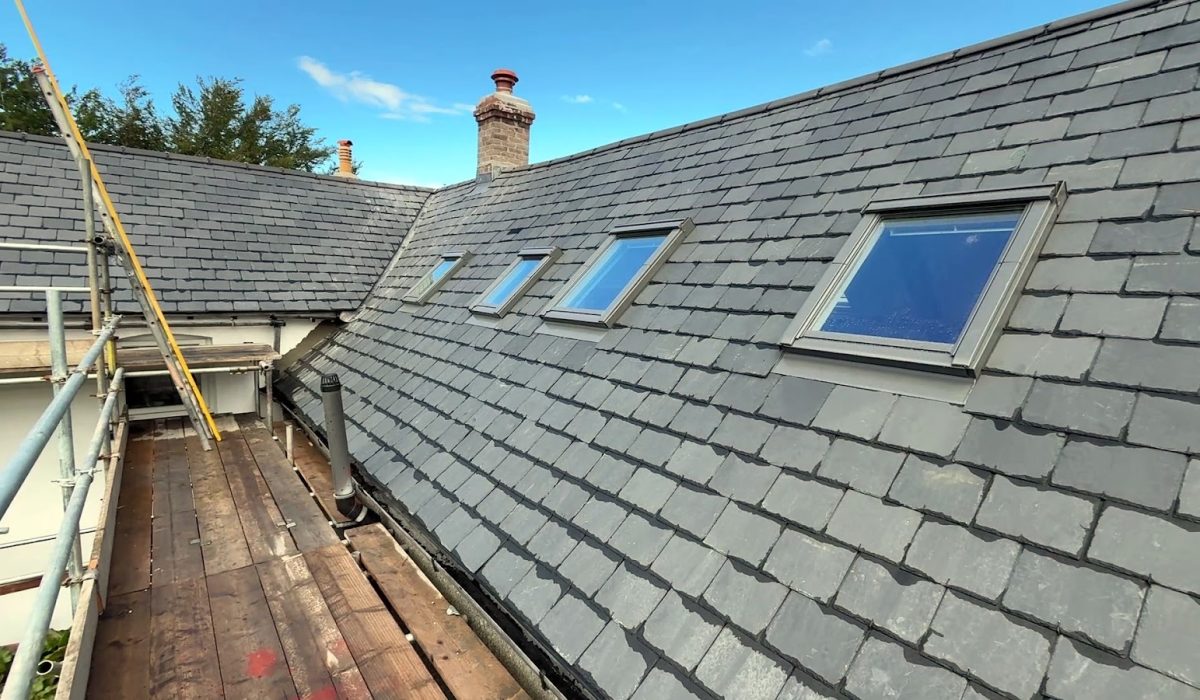
A well built pitched roof can last for decades, but only if the small things are looked after. Most of the expensive repairs we carry out started as something minor: a blocked gutter, one slipped slate, a bit of lifted lead. Caught early, they’re quick fixes. Left for a few winters, they turn into rotten timbers and damp ceilings.
This checklist covers what you can safely check yourself, how often, and when it’s time to get a roofer in.
A quick word on safety
Everything on this list can be done from the ground, from an upstairs window, or from inside the loft. Please don’t climb onto your roof. Slates and tiles are slippery and can break underfoot, and falls from height are one of the most common causes of serious injury at home. If something needs a closer look, that’s our job.
A pair of binoculars is one of the best tools you can have for checking a roof from the ground.
Gutters and downpipes
Check: twice a year, in late autumn after the leaves have dropped and again in spring.
- Look for gutters full of leaves, moss or silt
- Watch the gutters during heavy rain. Water spilling over the edge means a blockage or a gutter that’s lost its fall
- Check joints for drips and brackets that have come loose
- Make sure downpipes run freely and aren’t cracked or disconnected at the bottom
- Look for green staining or damp patches on the walls below gutters
Blocked gutters are one of the main causes of rot in rafter ends and wall plates, because water backs up over the fascia and soaks straight into the timber.
Slates and tiles
Check: once a year, and after any big storm.
- Look for slipped, cracked or missing slates and tiles
- Check for gaps in the rows or pieces of slate or tile on the ground or in the gutter
- On slate roofs, look for slates hanging lower than the rest, which usually means a nail or hook has failed
- Look for any areas of the roof that seem to dip or sag
One missing slate can let a surprising amount of water in, especially with the wind driven rain we get in North Devon.
Ridges, hips and verges
Check: once a year.
- Look for cracked or missing mortar along the ridge and down the hips
- Check the verges (the edges of the roof at the gable ends) for loose or missing mortar or tiles
- Look for ridge tiles that have moved or have gaps beneath them
Many newer roofs use dry fix ridge and verge systems, which are mechanically fixed and don’t rely on mortar. On our recent Braunton reroof we used dry fix throughout, so there’s nothing to crack or wash out.
Lead work and flashings
Check: once a year.
- Check the lead around chimneys, walls, dormers and roof windows is sitting flat and hasn’t lifted
- Look for splits or holes in lead valleys, where two roof slopes meet
- Check that lead is still tucked into the mortar joints of walls and chimneys
Failed lead valleys and flashings are behind a lot of the leaks we’re called out to, and they’re often missed because they’re hard to see.
Chimneys
Check: once a year.
- Look for crumbling or missing mortar between the bricks or stone
- Check the flaunching (the mortar around the chimney pots) for cracks
- Look for leaning stacks or pots
- Check for plants growing out of the chimney, which is a sign of water getting in
Moss
Check: once a year.
A light covering of moss is normal on North Devon roofs and won’t do much harm. Heavy moss is a different story. It holds water against the roof, can lift tiles and slates, and washes into the gutters and blocks them. If it’s building up, get it removed carefully. Pressure washing can damage slates and tiles and force water underneath, so it’s best avoided.
Roof windows and skylights
Check: once a year.
Look for condensation between panes, damp staining around the frame inside, or cracked seals. Make sure the flashing around the outside is intact and clear of debris.
Inside the loft
Check: twice a year, and after any big storm.
- Look for daylight coming through the roof
- Look for damp patches, water staining or drips on the timbers or underside of the felt
- Check for a musty smell, which can mean damp or condensation
- Make sure insulation isn’t pushed right up into the eaves and blocking ventilation
We’ll be posting a full guide to inspecting your loft space soon.
When to call a roofer
Call us if you spot any of the following:
- Water coming in, or damp patches on ceilings
- Slipped, missing or broken slates and tiles
- Lifted or split lead
- Sagging rooflines
- Damage after a storm
A small repair today costs far less than a new section of roof later.
Want us to take a look?
If you’d rather leave it to us, we can check your roof, gutters, lead work and chimney and tell you exactly what we find. We cover Barnstaple, Bideford, Braunton and the whole of North Devon.
Call us on 01271 359259 or get in touch through our contact page.