

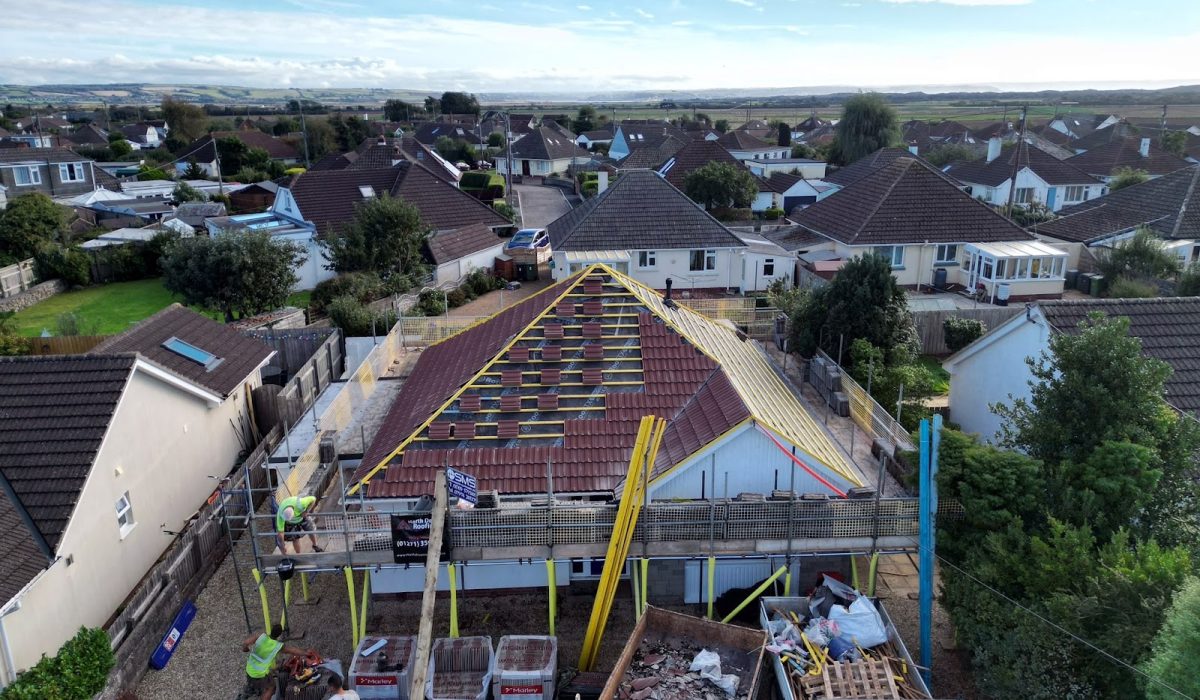
Living on the North Devon coast, we all know what winter brings. Named storms rolling in off the Atlantic, gusts strong enough to lift slates, and days of driving rain. Every winter our phones get busy with calls about slipped slates, lifted lead and water coming through ceilings.
You can’t stop the weather, but a bit of preparation before the worst of it arrives makes a real difference. Here’s what to check, what to do if your roof is damaged, and what we’d do to make a roof more storm resistant.
Before the storms: what to check
You can do all of this from the ground, an upstairs window or the loft. Please don’t go on the roof.
- Clear the gutters and downpipes. Heavy rain plus blocked gutters means water backing up into the roof and down the walls.
- Look for slipped, cracked or missing slates and tiles. A loose slate is easily lifted in high winds, and the gap it leaves lets rain straight in.
- Check the ridge and verges. Cracked mortar is the first thing a strong wind will find.
- Look at the chimney. Crumbling pointing, cracked flaunching or a leaning pot is a risk in high winds.
- Check lead flashings. Lead that has lifted at the edges can be peeled back further by the wind.
- Check flat roofs. Look for splits, lifted edges and blocked outlets, and clear off any leaves.
- Look in the loft. Daylight, damp patches or wet insulation are signs the roof needs attention before the bad weather.
- Secure loose items. Garden furniture, trampolines and bins can become missiles in a storm.
- Cut back overhanging branches. A falling branch can do serious damage to slates, tiles and flat roofs.
If you spot anything, get it looked at now. Repairs are far easier to book before a storm than in the days after one, when every roofer in the area is busy.
During a storm
- Stay safe. Never go onto a roof or up a ladder in high winds or heavy rain.
- If water is coming in, put buckets down, move valuables and electrics away and, if it’s safe to do so, turn off the electricity to the affected area.
- If a ceiling is bulging with water, keep clear of it.
- Take photos of any damage as it happens, inside and out. You may need them for an insurance claim.
After a storm
Have a look around from the ground for anything missing or out of place. Check gutters, the ground around the house and the loft. Even if nothing looks wrong, a quick check of the loft after a big storm can catch a small leak before it does any harm.
If there is damage, call a roofer as soon as you can. We’ll make the roof safe and watertight first with a temporary repair if needed, then come back and do the permanent fix.
Making an insurance claim
Most home insurance policies cover storm damage, but they don’t usually cover wear and tear. Insurers will often want to know the roof was in reasonable condition before the storm. Some tips:
- Take photos and video of the damage straight away
- Keep any slates, tiles or pieces of lead that have come off
- Don’t throw away receipts for any emergency work
- Get a written report and quote from a roofer
- Contact your insurer early and follow their process
We regularly provide reports and photos for clients making claims, so we can help you put together what your insurer needs.
Making a roof more storm resistant
If your roof is due for replacement, or you’re fed up with storm repairs every winter, there are things that make a real difference:
- Dry fix ridges, hips and verges. These are mechanically fixed, so there’s no mortar to crack or blow out. We used them on a recent Braunton reroof, which we finished in two and a half days to beat the forecast storms.
- Better fixings. Stainless steel slate hooks and extra clips on tiles in exposed areas hold up far better in high winds.
- Breathable membranes. A modern underlay is a second line of defence if a slate or tile does come loose.
- Properly fixed lead. Lead dressed and clipped correctly is much less likely to lift.
- Flat roofs with good falls. Water needs to run off fast, especially in wind driven rain.
Storm damage? We’re here to help
If your roof has been damaged in a storm, call us and we’ll get it made safe as quickly as we can. We cover Barnstaple, Bideford, Braunton, Ilfracombe and the whole of North Devon.
Call us on 01271 359259 or get in touch through our contact page.