

Your roof timbers do a lot of work you never see. Rafters, wall plates, purlins and flat roof decks carry the weight of the roof and everything on it, and they need to stay dry to do that. When water gets to them and stays there, rot sets in, and it usually goes unnoticed until the damage is well under way.
We open up a lot of roofs across North Devon, and rotten timber is one of the most common things we find. Our wet, windy, coastal weather doesn’t help. The good news is that if it’s caught early, it’s usually a straightforward repair. Here’s what to look for, what causes it and what we do about it.
What wood rot looks like
Rot in roof timbers isn’t always obvious, especially from inside the house. These are the signs worth looking out for:
- Timber that feels soft or spongy when you press it, or that a screwdriver sinks into easily
- Dark staining or wet patches on rafters, purlins or the underside of the deck
- Cracking across the grain, or timber breaking up into small cube shaped pieces
- A musty, damp smell in the loft
- White or grey fungal growth on the timber
- Damp patches or staining on ceilings below the roof
- A roofline that has started to dip or sag
- On flat roofs, a deck that feels springy or bouncy underfoot, or areas where water sits after rain
If you want to check your own loft safely, we’ll be covering that in more detail in an upcoming post on inspecting your loft space.
Wet rot and dry rot
Most rot we find in roofs is wet rot. It needs timber that stays damp, so it’s almost always tied to a leak or a condensation problem, and it stays close to the source of the water. Once the water is stopped and the damaged timber replaced, it doesn’t spread.
Dry rot is much less common but more serious. It can travel through masonry and spread well beyond the original damp area. If we ever suspect dry rot, we’ll tell you straight away and recommend a specialist timber survey before any work goes ahead.
What causes it
Rot always comes back to moisture. The most common causes we see are:
- Long term leaks: slipped or broken slates and tiles, cracked ridges, or worn lead flashings around chimneys and walls letting water in a little at a time, often for years.
- Failed valleys: split lead valleys or worn valley linings let water run straight onto the valley boards and rafters beneath.
- Blocked gutters: water backing up over the fascia and soaking the rafter ends and wall plates.
- Flat roofs that hold water: poor falls mean water sits on the roof, finds its way through any weak point and soaks into the deck and joists.
- Condensation: lofts without enough ventilation, old non breathable felt and some spray foam insulation can all trap moist air against the timbers.
A real example from Braunton
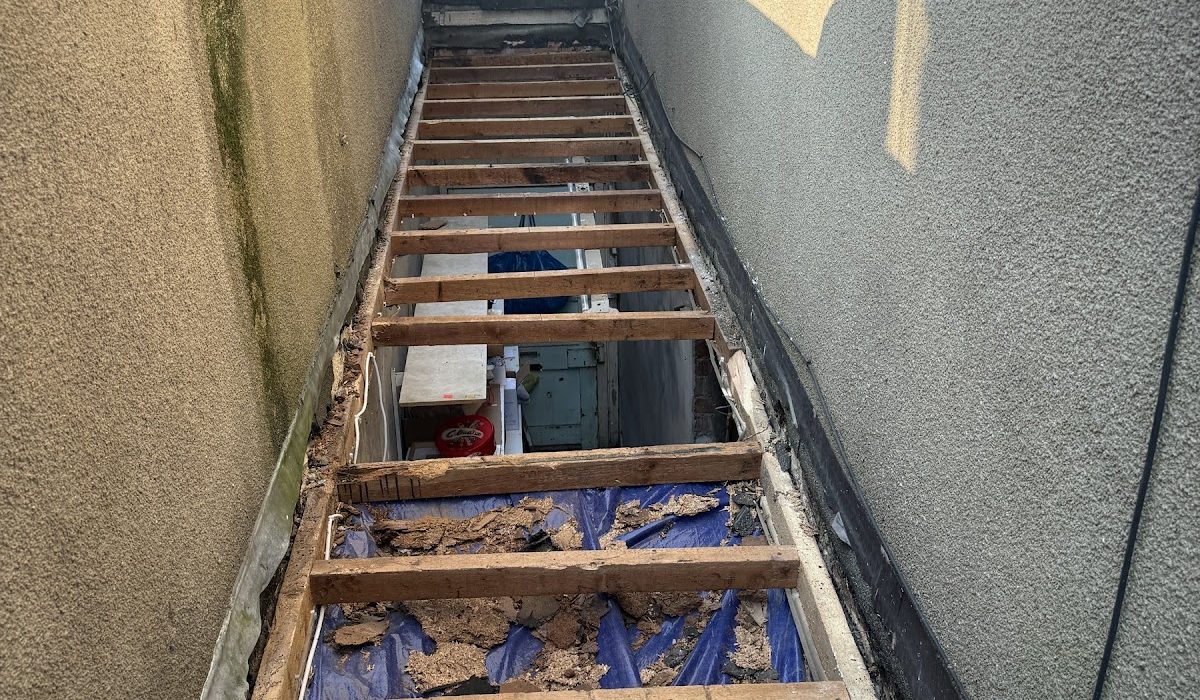
On a recent job in Braunton, we lifted an old bitumen felt flat roof and found the wall plate on one side had split and rotted through. A leak had been getting in for a long time and the timber was no longer carrying the roof.
We made the roof timbers and wall plates structurally sound, then fitted firring strips to give the roof a better fall, with the centre set slightly lower to carry water away from the walls. The roof was then finished in the Restec Flexi fibreglass system. With the water now running off properly, the new timber stays dry.
That’s typical of what we find: the rot itself is the result, and the real fix is dealing with whatever let the water in.
How we repair rotten roof timbers
Every job is different, but our approach is always the same:
- Find the source. There’s no point replacing timber if the leak or condensation is still there. We trace where the water is coming from first.
- Assess how far it goes. We open up the area and check the surrounding timbers, so nothing rotten is left behind.
- Replace or strengthen. Badly rotten rafters, wall plates or joists are cut out and replaced. Where a rafter is mostly sound, we can fix a new timber alongside it (known as sistering) to restore its strength.
- Treat and protect. New and existing timbers around the repair are treated, and we make sure the loft or roof void is properly ventilated.
- Fix the roof covering. Whether that’s new slates or tiles, a new lead valley, or a new flat roof with better falls, the roof is made watertight so the problem doesn’t come back.
How to stop it happening
Most rot can be avoided with a bit of regular care. Keep gutters and downpipes clear, keep an eye out for slipped slates or tiles after a storm, check your loft every now and then, and get leaks looked at early rather than living with them. A small leak repaired today is far cheaper than a new section of roof structure later.
We’ll be posting a full homeowner’s maintenance checklist for pitched and flat roofs soon, covering what you can check yourself and when it’s time to call a roofer.
Worried about your roof?
If you’ve noticed any of the signs above, or you’ve had a leak that keeps coming back, we’re happy to come and take a look. We cover Barnstaple, Bideford, Braunton and the whole of North Devon, and we’ll always explain what we’ve found and what your options are.
Call us on 01271 359259 or get in touch through our contact page.